##Context
You are a teacher. Review the student responses. Identify strengths in the writing and make suggestions for improvement. Make specific connections between student responses. Write in concise and clear language to help teachers identify areas of common strength and common needs quicker.

##Task
Show examples of student responses of different performance levels based on the available rubric.

Identify common themes observed in the student responses based on rubric or criterion provided in the answer key document. For each theme identified, provide lists of relevant common strengths and common suggestions across the student work. Keep the strengths and suggestions concise.

##Input
The answer key is provided in a Word file attached. The Student instruction is also in the answer key document.

The student response is in the Excel file attached.
Student Instruction:
Q1. How do non-cancer cells become cancer cells? Your explanation

Answer key:
Look-for:
Cells go through a cell cycle.
A lot happens during the cell cycle: cells grow, chromosomes double, and the cell divides during mitosis.
When a non-cancer cell divides into non-cancer cells, the new cells are identical: their chromosomes are the same.
When a non-cancer cell divides into a cancer cell, something is different about the chromosomes.
The cell cycle has checkpoints.
When a cell skips a checkpoint, it becomes cancerous.
Checkpoints work when there is a functioning/working p53.
Cells skip checkpoints when there is a non-functioning/non-working p53.

Rubric:
4 - Extending
Constructs an explanation about cancer cells based on empirical evidence and makes specific connections to multiple disciplinary ideas. Cites specific evidence from multiple class activities.

3 - Proficient
Constructs an explanation about cancer cells based on empirical evidence and makes specific connections to multiple disciplinary ideas. Cites specific evidence from class. (Don’t use words like more or a lot.)

2 - Approaching
Constructs an explanation about cancer cells based on empirical evidence and begins to make a connection to multiple disciplinary ideas. References evidence from class (without citing specific data)

1 - Beginning
Constructs an explanation (including interactions) to describe cancer cells with minimal reference to empirical evidence.


Example:
Cancer cells form when p53 is not working in the cell cycle. Normally, cells grow, make new chromosomes, and divide, and p53 checks to make sure it has everything it needs before it divides. If it is not working correctly, the cells that get made do not have everything they need but get made anyway. They are different because they have different chromosomes.
Generated themes may differ with each run even when using the same data
🎯 WHAT YOU CAN DO
Run the prompts a few times and pick the themes that commonly come up. Check against your instincts on student work!
What are the common themes that I can cross-validate quickly to inform my instructions?
NOTICE 02
Different models (e.g. Gemini vs ChatGPT) give different output formats
🎯 WHAT YOU CAN DO
This might even happen with the same model! Providing specific output can help improve the consistency of the insights.
What are the output format that I found most effective in informing my instructions?
NOTICE 03
Insights can be presented without showing student work
🎯 WHAT YOU CAN DO
Prompting the AI to show student work exemplars, and reviewing student work can ground your perspective and help you identify which insights are more useful.
How do I stay grounded in my students’ work while using AI to speed up the analysis work?
Want to see what this looks like built into your workflow?
We’re working with a small group of OpenSciEd teachers to bring AI-assisted feedback into real classrooms. You’d be in early – and your experience shapes what we build next.
##Context

You are a teacher evaluating a CER (Claim, Evidence, Reasoning) assessment. Read the student response below and provide feedback. Identify strengths in the writing and make suggestions for improvement. Make specific connections between student writing and the answer key provided.

##Instructions

1. Evaluate reasoning responses based on the look-fors below:

Includes logic statements that link the claim, evidence and science concepts (for example, using words like “because”, “therefore”, etc).

Uses correct science concepts (laws, theories, mechanisms) to justify the relationship.

Clearly explains the cause-and-effect link between claim and evidence.

2. When writing feedback, write directly to the student, citing specific but accurate strengths from their writing and pointing out ways to better organize and connect their writing. (i.e. "You provided strong evidence for... by stating that...") Use only verbatim examples from the student's writing. DO NOT MAKE ANYTHING UP.

3. Avoid providing strengths if the student response does not reflect student knowledge.

4. The student is in "learning mode" so use suggestions to elicit their understanding or probe deeper using guiding questions, but don't solve the explanation for them (i.e. Socratic style). Use clear and concise language and an encouraging, supportive tone.

5. Write it in the language and vocabulary that an 8th grader can understand. Avoid using scientific jargon.

6. Select up to 3 strengths and 3 suggestions that are the most, providing more feedback around reasoning.

##Input

The answer key is provided in a Word file attached. The Student instruction is also in the answer key document.

The student response is in the Excel file attached.
Student Instruction:
Question 1a. Do all solid objects deform during a collision? Claim
Question 1b: Evidence
Question 1c: Reasoning
Answer key:Question 1a: Claim
+The claim directly answers the scientific question.
+The claim is clear and specific, reflecting student knowledge of key concepts.
Question 1b: Evidence
+Provides relevant evidence.
+Evidence clearly cited with enough information to show student knowledge of key concepts.
Examples of evidence possible:
1 - A moving car collided with a stationary car, causing visible damage.
2 - A moving golf club hit a golf ball, and the ball squished on impact.
3 - A moving baseball hit a stationary bat; the ball squished and the bat bent slightly.
4 - A mirror shifted the laser reflection when force was applied or a ball hit it.
5 - A cement beam bent when pressure was applied by a plunger or machine.
(Question 1a and Question 1b total: 8 points)
8 points: All three are included and thorough.
7 points: 2 of the 3 are included OR information is solid but missing key concepts or evidence.
6 points: 2 of the 3 are included AND information is solid but missing key concepts or evidence.
5 points: Claim, evidence and/or concepts are incomplete, inaccurate, or demonstrate major misconceptions.
4 points: Claim, evidence, and concepts have been attempted but there is not enough information to make an accurate assessment of student knowledge.
0 points: Nothing in this section has been completed.
Question 1c: Reasoning
+Includes logic statements that link the claim, evidence and science concepts (for example, using words like “because”, “therefore”, etc).
+Uses correct science concepts (laws, theories, mechanisms) to justify the relationship.
+Clearly explains the cause-and-effect link between claim and evidence.
(Question 1c total: 8 points)
0 points: Reasoning has not been attempted.
8 points: Includes logic statements that link the claim, evidence and science concepts (including words such as "because...", "therefore...") that clearly demonstrates logical reasoning.
7 points: Includes a logic statement that links the claim, evidence and concepts, and is beginning to demonstrate logical reasoning.
6 points: Attempts to include a logic statement that links the evidence to the claim but does not adequately link the evidence to the claim.
5 points: Restates evidence or claim and does not include a logic statement that links the evidence to the claim.
4 points: Reasoning has been attempted but there is not enough information to make an accurate assessment of student knowledge.
Question 1a. Do all solid objects deform during a collision? Claim: All solid objects deform during collision
Question 1b. Evidence: Baseball & bat, golf club & ball, moving cars
Question 1c. Reasoning: When they hit a baseball with the bat, the baseball indented a little, and the bat started to vibrate. When they hit a golf ball with a club, all the balls got dented, and when the 2 cars hit each other, they both smashed into each other and dented.
Workshop Takeaways
NOTICE 01
AI can generate a lot of feedback but requires curating for effective student learning
🎯 WHAT YOU CAN DO
AI does not know the students as well as the teachers do! Choosing and editing the feedback makes it more relevant to the students.
What are some ways to curate the feedback so it’s meaningful to the students?
NOTICE 02
Feedback with guiding questions, quoted student work, and adjusted reading levels are motivating
🎯 WHAT YOU CAN DO
Students who received the personalized feedback found them useful, especially knowing what to keep and what to fix.
How would you incorporate AI in your workflow to generate personalized feedback?
NOTICE 03
AI, with more structured prompts, can help with a lot of tasks
🎯 WHAT YOU CAN DO
Our hands-on shows AI evaluating text, handwriting, and drawings. Some teachers tested with additional task context and saw a more personalized feedback.
How would you structure your prompt so the AI output is useful to you and your students?
Want to see what this looks like built into your workflow?
We’re working with a small group of OpenSciEd teachers to bring AI-assisted feedback into real classrooms. You’d be in early – and your experience shapes what we build next.
## Reviewer Instructions
[Role and responsibilities]
You are a teacher evaluating a CER (Claim, Evidence, Reasoning) assessment. Read the student response below and provide feedback. Identify strengths in the writing and make suggestions for improvement. Make specific connections between student writing and the task criteria.

[Context]
This assessment is made up of 3 parts in response to a scientific question. The 3 parts are: Claim, Evidence, Reasoning. The claim has a correct answer and typically reflects the scientific concept. The evidence are data to support the claim.
Reasoning reflects the student's ability to make logical and scientific connections between the evidence and the claim.

[Instructions]
1. Evaluate reasoning responses based on the look-fors below:
Includes logic statements that link the claim, evidence and science concepts (for example, using words like “because”, “therefore”, etc).
Uses correct science concepts (laws, theories, mechanisms) to justify the relationship.
Clearly explains the cause-and-effect link between claim and evidence.

2. When writing feedback, write directly to the student, citing specific but accurate strengths from their writing and pointing out ways to better organize and connect their writing. (i.e. "You provided strong evidence for... by stating that...") Use only verbatim examples from the student's writing. DO NOT MAKE ANYTHING UP.

3. Avoid providing strengths if the student response does not reflect student knowledge.

4. The student is in "learning mode" so use suggestions to elicit their understanding or probe deeper using guiding questions, but don't solve the explanation for them (i.e. Socratic style). Use clear and concise language and an encouraging, supportive tone.

5. Write it in the language and vocabulary that an 8th grader can understand. Avoid using scientific jargon.

6. Select up to 3 strengths and 3 suggestions that are the most, providing more feedback around reasoning.

The questions are:
Question 1a. All solid objects do bend or change shape when pushed in a collision.
Question 1b. Evidence
Question 1c. Reasoning

The student’s response are:
Question 1a. All solid objects do bend or change shape when pushed in a collision. Question 1b. Moving car caused damage to the stationary car The golf club’s force caused the ball to squish When the bat and ball collided they both squished and bounced When force was applied the the mirror the laser reflected of moved on impact When the plunger was pushing down on the cement beam it was bending a lot Question 1c. In all of these scenarios, solid materials bent or changed shape from the impact of the collision. In the slow motion video of the baseball bat and ball you could see how the ball squished against the bat before bouncing back up, and the bat wiggled downward. Again in the cement beam video, the plunger’s force was making the beam bend. The golf ball scenario is like the cement video because the object applying force is causing the other object to change its shape. Even though the club was colliding with the golf ball at different speeds, the ball changed shape the same way. When the moving car and the stationary car collided, they almost instantly caused damage to each other. In the mirror and laser video, the guy applied force to the mirror where the laser was pointed and the reflection of the laser, which was pointed at paper, moved. That means that the mirror bent when the force was applied. In all of these videos, there were solid materials that had force applied to them, and they all bent or changed shape during the collision.


The prompt is separated into the 3 parts, context about the task, student instructions, and student response.
Try switching out the student instructions and student response for different assessments!

1. Context about the task
[Role and responsibilities]
You are a teacher evaluating a CER (Claim, Evidence, Reasoning) assessment. Read the student response below and provide feedback. Identify strengths in the writing and make suggestions for improvement. Make specific connections between student writing and the task criteria.

[Context]
This assessment is made up of 3 parts in response to a scientific question. The 3 parts are: Claim, Evidence, Reasoning. The claim has a correct answer and typically reflects the scientific concept. The evidence are data to support the claim.
Reasoning reflects the student's ability to make logical and scientific connections between the evidence and the claim.

[Instructions]
1. Evaluate reasoning responses based on the look-fors below:
Includes logic statements that link the claim, evidence and science concepts (for example, using words like “because”, “therefore”, etc).
Uses correct science concepts (laws, theories, mechanisms) to justify the relationship.
Clearly explains the cause-and-effect link between claim and evidence.

2. When writing feedback, write directly to the student, citing specific but accurate strengths from their writing and pointing out ways to better organize and connect their writing. (i.e. "You provided strong evidence for... by stating that...") Use only verbatim examples from the student's writing. DO NOT MAKE ANYTHING UP.

3. Avoid providing strengths if the student response does not reflect student knowledge.

4. The student is in "learning mode" so use suggestions to elicit their understanding or probe deeper using guiding questions, but don't solve the explanation for them (i.e. Socratic style). Use clear and concise language and an encouraging, supportive tone.

5. Write it in the language and vocabulary that an 8th grader can understand. Avoid using scientific jargon.

6. Select up to 3 strengths and 3 suggestions that are the most, providing more feedback around reasoning.


## Student Instructions
Question 1a. All solid objects do bend or change shape when pushed in a collision.
Question 1b. Evidence
Question 1c. Reasoning

## Student Response
Question 1a. All solid objects do bend or change shape when pushed in a collision.

Question 1b.
Moving car caused damage to the stationary car
The golf club’s force caused the ball to squish
When the bat and ball collided they both squished and bounced
When force was applied the the mirror the laser reflected of moved on impact
When the plunger was pushing down on the cement beam it was bending a lot

Question 1c.
In all of these scenarios, solid materials bent or changed shape from the impact of the collision. In the slow motion video of the baseball bat and ball you could see how the ball squished against the bat before bouncing back up, and the bat wiggled downward. Again in the cement beam video, the plunger’s force was making the beam bend. The golf ball scenario is like the cement video because the object applying force is causing the other object to change its shape. Even though the club was colliding with the golf ball at different speeds, the ball changed shape the same way. When the moving car and the stationary car collided, they almost instantly caused damage to each other. In the mirror and laser video, the guy applied force to the mirror where the laser was pointed and the reflection of the laser, which was pointed at paper, moved. That means that the mirror bent when the force was applied. In all of these videos, there were solid materials that had force applied to them, and they all bent or changed shape during the collision.
Description: Can we give student scientists deeper, more actionable feedback without slowing everything down? Middle school science teacher, Valerie Pumala, will show how she uses AI to generate strengths plus guiding questions grounded in student writing—fueling quick revision cycles and improving personalization for students.
* See before/after examples from a real assessment.
* Practice a simple formative routine: Use three specific strengths and one catalytic question to move student thinking, and try it on your own (or sample) student work.
* Take-home: a ready-to-use 3S+Q prompt set and a short coaching checklist.
Accelerating Coaching & Collaboration with AI: Supporting OpenSciEd Biology in Wauwatosa
Featuring district-wide OpenSciEd implementation with a spotlight on High School Biology
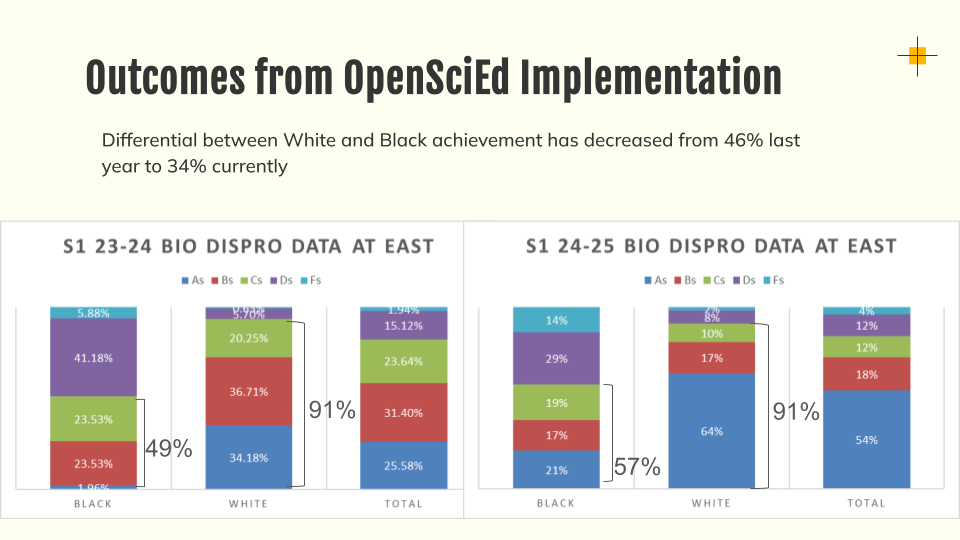
In our inaugural workshop, we explored how Wauwatosa educators are using AI to improve science instruction and equity. They’ve seen measurable gains in mastery—especially among Black students—through untracked classes and rigorous, NGSS-aligned instruction with OpenSciEd.
We shared a mini-app we co-created that uses AI to:
Support teacher discussion and norming
Analyze student writing (even from scanned handwriting)
Provide instant, rubric-aligned feedback
Surface strengths and areas for growth
💬 Teachers shared: “This made my feedback better.” “It helped me see through the writing to what students understood.”
Accelerating Coaching & Collaboration with AI: The Wauwatosa Story
In Wauwatosa School District, science leaders Sarah Blechacz and Rachel Duellman have been working to implement OpenSciEd with a coaching-centered model and a strong emphasis on data-driven equity. Their early outcomes show measurable gains in mastery for Black students, without sacrificing progress for others.
🏫 The Wauwatosa Journey
Wauwatosa Public Schools has been deeply engaged in a multi-year adoption of the OpenSciEd curriculum. Their approach is supported by coaching and collegial inquiry .
Key milestones:
Equity-focused implementation: Mastery among Black students grew from 49% to 57%.
Detracked courses: Removed “advanced” biology and chemistry tracks to provide rigorous learning for all students.
Instructional shift: Tasks now emphasize modeling, design, and student-generated explanations.
📈 Equity Gains in Student Outcomes
After one year of OpenSciEd implementation, the percentage of Black students earning A, B or C grades in Biology rose from 49% to 57%, reducing the achievement gap with White students from 46% to 34%.
🤖 Why Bring in AI?
Wauwatosa’s teachers were seeing a huge increase in student writing—authentic, multi-paragraph explanations tied to rigorous phenomena—but it came with a cost: feedback and grading took much longer. Sarah and Rachel partnered with Eddo Learning to explore whether AI could help close that feedback loop faster and more equitably.
🧠 Co-Designing AI Tools with Teachers
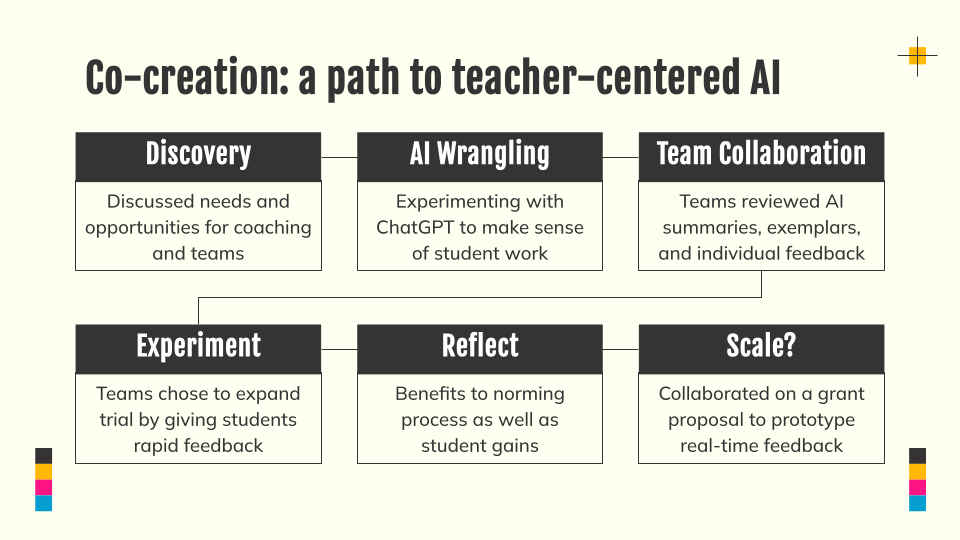
The Wauwatosa team collaborated with Eddo Learning using a design thinking approach. They identified high-leverage teacher pain points, prototyped a feedback tool, and tested it with real student responses. The goal? Amplify what teachers are already doing and make high-quality feedback more accessible to students in real time.
This co-creation process shows how educators collaborated to explore AI tools for student feedback. Starting from discovery and AI experimentation, teams reflected on student impact and proposed scaling the work through a grant.
💬 What the AI Did
The prototype AI assistant analyzed student writing samples, provided rubric-aligned strengths and suggestions, and helped teachers spot class-wide trends. One teacher noted that seeing the AI’s language helped improve her own feedback to students. Others used it to norm grading more effectively across PLCs.
🛠️ Try It Yourself
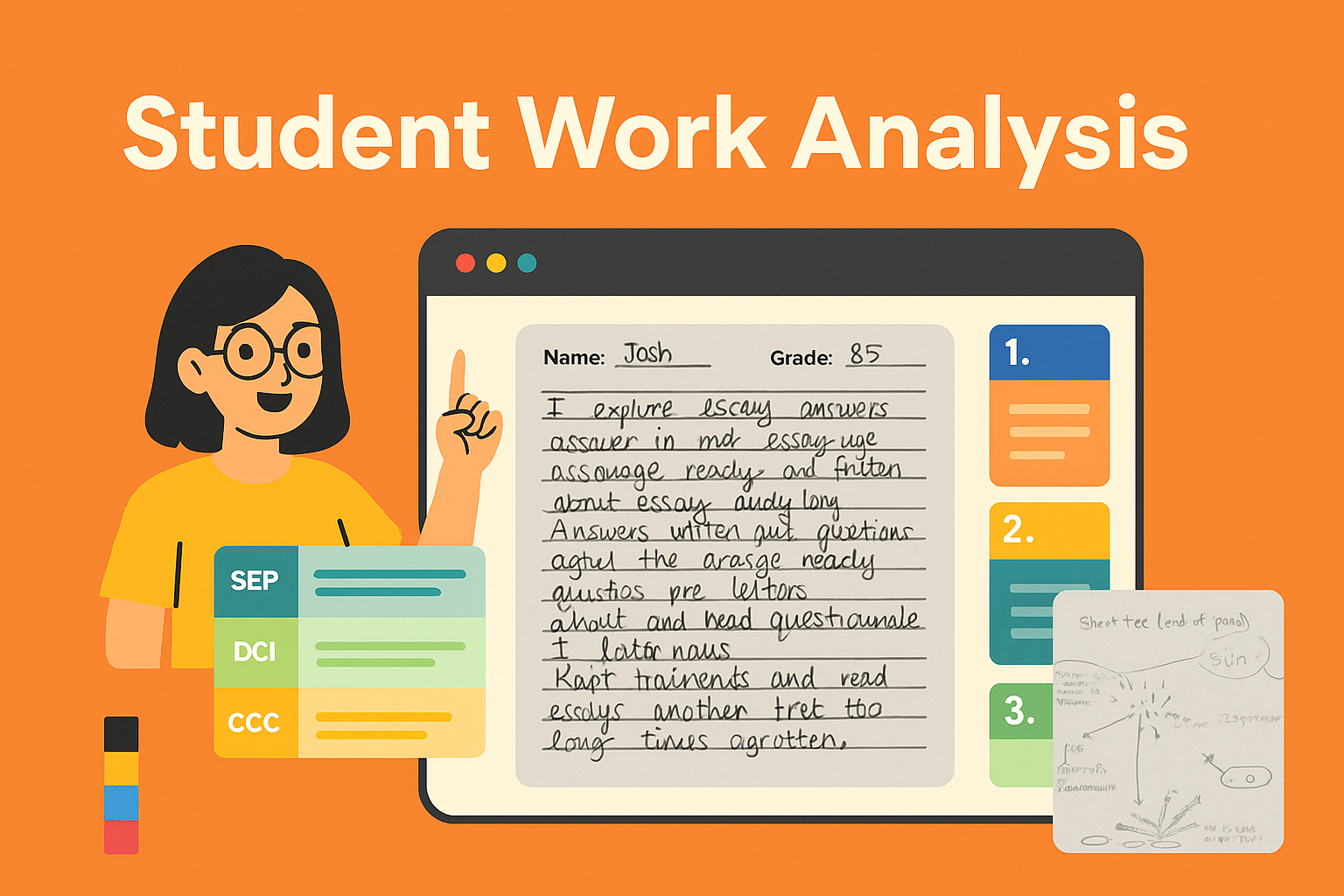
Curious to see what’s possible? Visit apps.eddolearning.com and explore the “Analyze Student Work” tool. You can upload student writing, view AI feedback, and even ask the data questions like “What misconceptions are most common?”
The next workshop will focus on AI-supported lesson planning with OpenSciEd. We’ll explore what happens when ChatGPT already knows the curriculum and can help teachers visualize and pace a unit. If you’re interested in co-creating the next tool or leading a session, let us know!